A stroll through Beirut’s heritage-laden streets is an experience in itself. Tilt your head up and discover curved stone arches, wrought iron balconies, and countless Ottoman-era details. These resilient buildings have weathered the Civil War, Beirut port blast, and Israel’s repeated attacks on the city. Today, revival is underway; heritage buildings are being lovingly restored into cultural spaces, traditional restaurants, and welcoming guesthouses. Here are some of the most remarkable revived heritage buildings in Beirut to visit when you’re next in Lebanon.
Arthaus
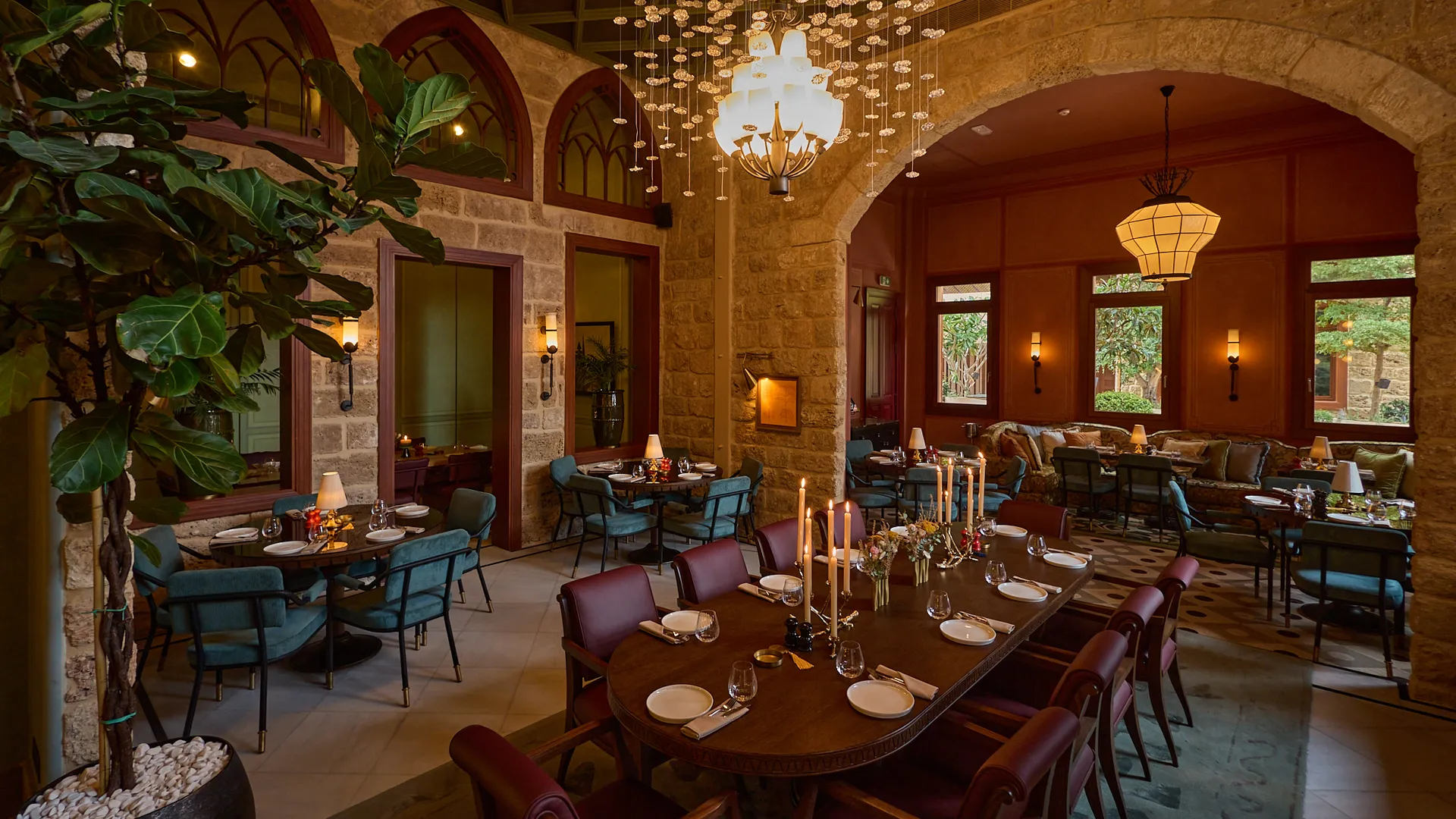
A boutique hotel nestled in Beirut’s upmarket Gemmayzeh district, Arthaus spans four restored Ottoman-era houses. Inside, palatial stone archways and lofty wooden beam ceilings frame stained-glass windows. Contemporary artwork and an extensive collection of antiques complement the architecture, with Roman mosaics and rare books found throughout the property. @arthausbeirut
Sursock Museum
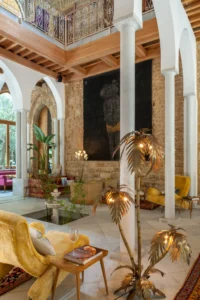
Located in Beirut’s Achrafieh district, the Sursock Museum occupies an Ottoman-era villa built in 1912. Its architecture is defined by Venetian and Ottoman influences, featuring intricate stained glass windows and hand-carved wooden flooring. Owing to its location, the museum was badly damaged during the 2020 port blast. A painstaking, two-year-long restoration project saw the property’s structural and decorative elements repaired, with the museum reopening officially in 2023. @sursockmuseum
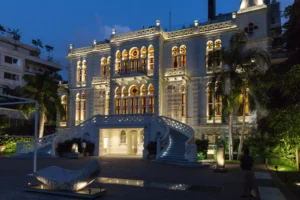 Located in Beirut’s Achrafieh district, the Sursock Museum occupies an Ottoman-era villa built in 1912. Photo: Nadim Asfar/Sursock Museum
Kalei Ras Beirut
Kalei Ras Beirut is housed in an Ottoman-era residence dating back to the 1800s. The property has been protected by Lebanon’s Ministry of Culture since 2018, meaning that the restoration project, led by interior designer Jennifer Hage-Obeid, involved meticulous care to preserve original elements. Opened as a cafe in January 2019, the spot features terracotta-tiled porches, high ceilings, shuttered windows, velvet sofas, and wicker chairs, creating a refined yet relaxed atmosphere that honours the building’s history. @kaleicoffee.co
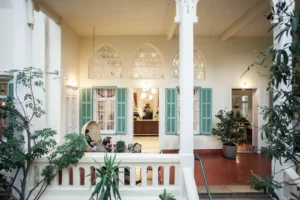
Opened as a cafe in January 2019, Kalei Ras Beirut features terracotta-tiled porches, high ceilings, and shuttered windows. Photo: Supplied
Salon Beyrouth
Tucked along a side street in Beirut’s vibrant Hamra district, Salon Beyrouth occupies a restored mid-century residential home. It is now a whisky and jazz bar, though the interiors still reflect the building’s retro history; black-and-white chequered marble floors, leather bar stools, and low-hanging vintage lighting evoke a classic Art Deco vibe. A wide-reaching mid-century porch wraps around the entrance, overlooking a front garden turned alfresco dining area. Be sure to visit for one of their live jazz, blues, and tango performances. @salonbeyrouth
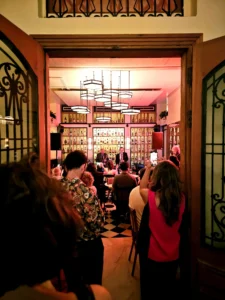
The interiors still reflect the building’s retro history with black-and-white chequered marble floors, leather bar stools, and low-hanging vintage lighting. Photo: Supplied
Beit Beirut Museum of Culture
Designed by Youssef Aftimos in 1924, Beit Beirut – also dubbed the Yellow House – features an ochre facade adorned with Art Deco motifs and delicate concrete columns. During the Civil War, right-wing Christian militia took over the building and turned it into a sniper’s nest, resulting in significant damage to the structure and facade of the property. In 2016, the heritage house was restored as a museum and urban cultural centre. @beitbeirutmuseum
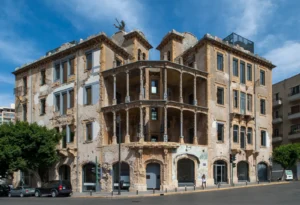
In 2016, the heritage house was restored as a museum and urban cultural centre. Photo: Géraldine Bruneel
Beit Tamanna
Located in the heart of Gemmayzeh, the Beit Tamanna guesthouse occupies a quaint French Mandate-era building. Each of the property’s eight suites and three communal areas was crafted by different designers, including the likes of Nada Debs and Samer Al Ameen. All of the rooms now boast a unique character, with some defined by jungle murals and velvet upholstery, whilst others are far more minimalist. Designed to fund the Tamanna NGO, which grants wishes to critically ill children, the guesthouse reinvents heritage hospitality while directly supporting a worthwhile cause. @beit_tamanna
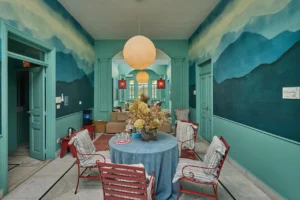
All of the rooms boast a unique character, with some defined by murals. Photo: Supplied
Liza Beirut
Liza Beirut, a Lebanese restaurant owned by Ziad and Liza Asseily, occupies a wonderfully restored 19th-century palace in the Achrafieh district. The interior, designed by Maria Ousseimi, blends contemporary elegance with classic Ottoman-style elements – think white marble floors and intricately carved wooden arches. Four distinctly themed rooms provide varied atmospheres, each enhanced by playful murals and refined textures. Although it is worth visiting for the architecture, be sure to try the food too. The menu features old-time favourites like molokhia, an aromatic chicken stew made with jute leaves. @lizabeirut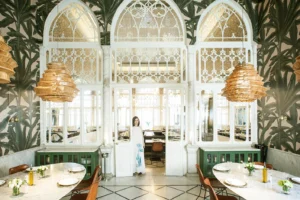
The interior blends contemporary elegance with classic Ottoman-style elements. Photo: Supplied
Beit Kanz
Set in Beirut’s heritage-rich Sursock district, Beit Kanz resides in a 19th-century building fusing Ottoman and Art Deco styles. The property was severely damaged during the 2020 port explosion, resulting in an extensive restoration project – intricate woodwork, patterned tiles, and hand-painted silk wallpaper were revived by skilled craftsmen. Owned by Beit El Baraka, a non-profit organisation assisting Lebanese families in financial distress, the cultural hub now houses a Lebanese restaurant, artisanal boutique, and gourmet shop selling goods from local producers. @beitkanz
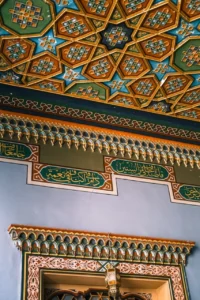
Intricate woodwork, patterned tiles, and hand-painted silk wallpaper were revived by skilled craftsmen in the property. Photo: Supplied
Union Marks
Union Marks is a bar housed inside a 1940s textile factory in Beirut’s Bourj Hammoud district. The space retains original cement flooring, steel beams, and scattered rusting machinery, all framed by an ivy-covered stone façade. Its large courtyard and adjacent warehouse provide a venue for music and art events, with the bar serving fabric-inspired cocktails to honour the industrial legacy of the property – order a Felt, Cotton, or Cashmere drink and dance the night away. @unionmarks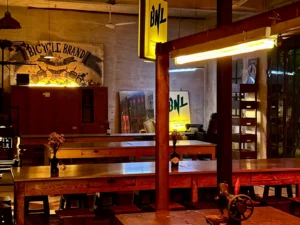
Union Marks is a bar housed inside a 1940s textile factory Photo: Supplied
BeiHouse
Lebanon’s first private members’ club, Beihouse, was recently opened in a trio of restored Ottoman-era townhouses. Severely damaged by the 2020 port blast, the buildings qualified for demolition under Lebanese law, which permits razing structures damaged over 60 percent. Most properties that qualified were destroyed and sold, often to make way for profitable high-rise developments. Defying this trend, the owners carefully restored the original architecture, using original sandstone and timber alongside corten steel and high-performance glass. The interiors are equally tasteful, showcasing bespoke plasterwork, vintage furnishings, and crafts from Tripoli-based artisans. @beihousebeirut
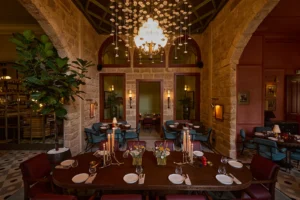
The interiors are tasteful, showcasing bespoke plasterwork, vintage furnishings, and crafts from Tripoli-based artisans. Photo: Vartan Seraydarian
BEYt Cafe
BEYt Cafe occupies a 150-year-old house in Beirut’s Mar Mikhael district. The original architecture remains intact, with exposed stone walls, Lebanese triple arches, and marble flooring featured throughout. High vaulted ceilings and open balconies provide airy, light-filled seating areas for guests of the cafe. Serving as a cultural hub, the cafe frequently hosts events, so be sure to check their Instagram page before visiting. @beyt.lb
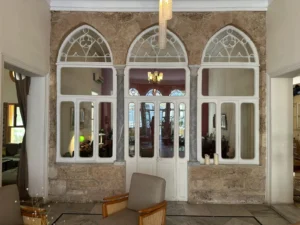
BEYt Cafe occupies a 150-year-old house in Beirut’s Mar Mikhael district. Photo: Celine Tayet